
What Is Cash Flow? The Complete Guide to Cash Flow Management for Small Business Owners (2026)

Updated: Sep 26
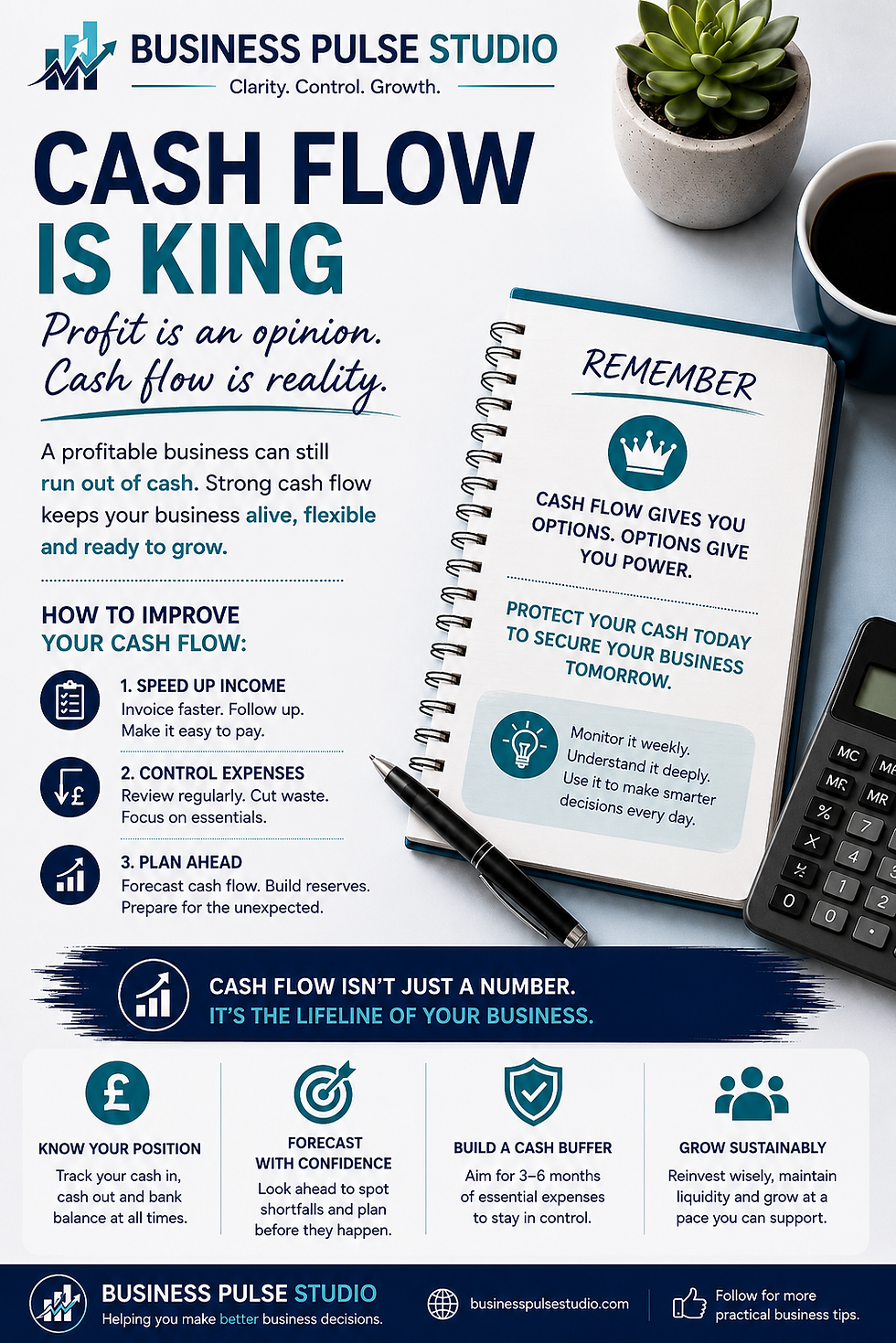
Cash flow is often described as the lifeblood of a business, and for good reason.
Regardless of how profitable your business appears on paper, without sufficient cash available to pay suppliers, employees, rent and other day-to-day expenses, even successful businesses can quickly encounter financial difficulties.
In fact, one of the most common reasons businesses struggle is not because they fail to make sales, but because they fail to manage their cash effectively.
Whether you're launching a new venture, running an established company or managing a growing side business, understanding cash flow is essential to making informed financial decisions and building a resilient business.
In this guide, we'll explain what cash flow is, why it matters, how it differs from profit, the common causes of cash flow problems and practical strategies you can implement to improve your financial position.
What Is Cash Flow?
Cash flow refers to the movement of money into and out of your business over a specific period.
Simply put:
Cash Inflows are the money your business receives.
Cash Outflows are the money your business spends.
Your cash flow position is the difference between these two.
If more cash enters the business than leaves it, you have positive cash flow.
If more cash leaves the business than comes in, you have negative cash flow.
Maintaining positive cash flow allows your business to meet its financial commitments, invest in growth and respond confidently to unexpected expenses.
Why Cash Flow Is So Important
Many business owners assume that increasing sales automatically means their business is financially healthy.
Unfortunately, this isn't always true.
Imagine a business that invoices £100,000 during a month.
If its customers take 90 days to pay, but wages, rent and suppliers must be paid within 30 days, the business may experience severe cash shortages despite appearing profitable.
Cash flow affects almost every aspect of a business, including:
Paying employees on time
Purchasing inventory
Meeting supplier payment terms
Investing in equipment
Managing tax obligations
Responding to unexpected costs
Funding future growth
Healthy cash flow provides flexibility. Poor cash flow creates pressure.
Cash Flow vs Profit
Cash flow and profit are often confused, but they measure very different things.
Profit represents the amount of money remaining after deducting business expenses from revenue.
Cash flow measures the actual movement of money into and out of your business.
A profitable business can still experience cash flow problems if payments from customers are delayed or significant expenses arise before income is received.
Likewise, a business with modest profits may maintain excellent cash flow through effective financial management.
Understanding both metrics provides a much clearer picture of business performance.
Positive and Negative Cash Flow
Positive Cash Flow
Positive cash flow occurs when cash entering the business exceeds cash leaving it.
Benefits include:
Greater financial stability
Easier bill payments
Improved investment opportunities
Better resilience during economic uncertainty
Negative Cash Flow
Negative cash flow occurs when expenses exceed incoming cash over a period.
While occasional periods of negative cash flow may occur during investment or seasonal fluctuations, persistent negative cash flow can place significant strain on a business.
Common Causes of Cash Flow Problems
Cash flow issues rarely arise from a single factor.
More commonly, they develop through a combination of operational and financial challenges.
Common causes include:
Late Customer Payments
Slow-paying customers can significantly delay cash entering the business.
Rapid Business Growth
Growing businesses often need to purchase additional stock, recruit employees or invest in equipment before receiving additional revenue.
Poor Pricing
Underpricing products or services reduces available cash and limits future investment.
Excess Inventory
Holding unnecessary stock ties up valuable working capital.
Unexpected Costs
Equipment failures, repairs or emergency expenses can quickly reduce available cash.
Seasonal Demand
Many businesses experience predictable fluctuations throughout the year that require careful planning.
Practical Ways to Improve Cash Flow
Improving cash flow often involves making small operational improvements consistently rather than relying on a single solution.
Invoice Promptly
Issue invoices as soon as work is completed and clearly communicate payment terms.
Monitor Outstanding Payments
Follow up overdue invoices promptly and maintain good communication with customers.
Review Business Expenses
Regularly evaluate subscriptions, supplier costs and overheads to identify opportunities for savings.
Build Cash Reserves
Maintaining a financial buffer provides greater resilience during quieter trading periods or unexpected events.
Forecast Ahead
Preparing a monthly cash flow forecast helps identify potential shortages before they occur, allowing time to take corrective action.
Why Cash Flow Forecasting Matters
One of the most effective ways to improve financial control is by forecasting future cash movements.
A cash flow forecast estimates expected income and expenditure over future weeks or months, helping business owners anticipate periods where additional funding or cost reductions may be required.
Rather than reacting to problems after they arise, forecasting enables proactive decision-making.
Businesses that forecast regularly are generally better prepared to manage growth, seasonal fluctuations and unexpected expenses.
Common Cash Flow Mistakes
Many businesses unknowingly weaken their cash position by:
Confusing profit with available cash
Failing to forecast future cash requirements
Ignoring tax liabilities such as VAT
Offering lengthy payment terms without careful consideration
Carrying excessive inventory
Relying too heavily on a small number of customers
Delaying financial reviews
Recognising these issues early can prevent more serious financial challenges later.

How Business Pulse Studio™ Can Help
Managing cash flow manually can quickly become complex as your business grows.
The Business Pulse Studio™ Cash Flow Planner Pro™ has been developed to help businesses monitor incoming and outgoing cash, forecast future cash balances and gain greater visibility over their financial position.
Designed for Microsoft Excel, it provides a structured framework for planning ahead, identifying potential shortfalls and supporting better financial decision-making.
Final Thoughts
Cash flow is far more than an accounting term, it is one of the clearest indicators of your business's financial health.
By understanding where your money comes from, where it is being spent and what your future cash position is likely to look like, you can make better decisions, reduce financial stress and build a stronger, more resilient business.
Whether you're managing a start-up or an established company, developing strong cash flow management habits will continue to benefit your business for years to come.
Frequently Asked Questions
What is cash flow in simple terms?
Cash flow is the movement of money into and out of a business over a specific period.
Why is cash flow important?
Healthy cash flow ensures a business can pay its bills, meet financial obligations and invest in future growth.
Can a profitable business run out of cash?
Yes. A business can report a profit while experiencing cash flow problems if customers delay payments or expenses must be paid before income is received.
How often should I prepare a cash flow forecast?
Most small businesses benefit from updating their cash flow forecast at least once a month. Businesses experiencing rapid growth or seasonal trading may prefer weekly reviews.
What's the difference between cash flow and a cash flow forecast?
Cash flow reflects the actual movement of money into and out of a business. A cash flow forecast estimates future cash movements to help businesses plan ahead.

Comments